Showing posts with label Colorado. Show all posts

Wednesday, July 17, 2024

Unearthing Ancient Fossils: A Reflection on the Giants in My Life

By Steven Wade Veatch

I remember a scorching summer afternoon in 1992, when, with my new wife Shelly and mother-in-law Karen, I walked on a trail that meandered down the hill known as Cope’s Nipple—named after the 19th-century paleontologist who explored this site for dinosaur bones. People refer to the area as Garden Park, and it is located a few miles north of Cañon City, Colorado. 

With my mother-in-law in tow, I took the lead and attempted to be on my best behavior. She was visiting us from Interlochen, Michigan. As we walked, her presence loomed over me, casting a shadow that seemed to stretch endlessly. The air was heavy with her silent intensity, making the surroundings feel eerily quiet. I imagined a pleasing scent in the air. It reminded me of my mother-in-law's garden in Michigan. This added a mysterious touch to the atmosphere. It felt as if every step we took was heavy, as if her presence alone had a gravitational pull. My thoughts went back and forth between making a good impression on her and conjuring in my mind—since we were walking on a dinosaur graveyard—a spike-tailed Stegosaurus defending himself from an Allosaurus.

Depiction of an Allosaurs prowling about in Garden Park
during the Jurassic Period. AI generated image.

As I walked through this area, memories flooded back from two years before when I had explored it with a friend. As we made our way up a hill on that sunny day my friend and I unexpectedly came across a hilltop ornamented with an abundance of petrified wood. The sight was mesmerizing, with the hill covered in these ancient, hardened remains of trees. The wood appeared as if frozen in time, its intricate patterns and textures on full display. The crisp sound of our footsteps echoed through the stillness of the hilltop, adding an eerie ambiance to the scene. A faint scent of earthiness lingered in the air, reminding us of the long history embedded in these petrified remains. As we gently touched the wood, a cool, smooth sensation greeted our fingertips, connecting us to the past. We were the first ones to see all of this petrified wood. If someone had been there before us, all the wood would probably have been taken.

Shelly and Karen kept up with me as we continued to descend Cope’s Nipple. The scorching sun baked everything in a relentless heat. While we were going down a gentle slope, Shelly and Karen talked about how different this landscape was than the woodlands and humid air of northern Michigan. Shelly vividly recounted to her mother the harrowing encounter she had had a year before, when a venomous rattlesnake unexpectedly lunged at her on an earlier trip here. She urged her mother to remain vigilant and attentive while going down the pathway.

It was the hottest part of the day as we continued to walk along the trail that now cut through a dark-red disintegrated siltstone, part of the world-famous Jurassic-age Morrison Formation. Insects buzzed under an intense Colorado blue sky. A scorpion scurried with a quick dart beneath a cracked slab of siltstone, its jagged edges leaning against a smooth cobble of quartz. Time seemed to slow down in the heat, and seconds lingered in the dry air. 

I had been here in the spring of 1991 with a prospector buddy. On that day, while ascending a ravine, we stumbled upon huge heaps of bentonite clay. It had rained the night before, and the clay had swollen up to five times its normal size. Nodules of a lilac-purple St. Stephen’s agate were bulging out of the swollen, wet clay. I crawled up the side of a clay mound and plucked out one of these agates. As I held it to the sunlight to see the concentric layers inside, I slipped and slid down the slick clay on my backside. Wet, cement-like clay covered my back to my head. There was no way to wash it off, and it was solidifying in the arid air. My wife had a lot to say about this when I returned home. She also wanted to see this place, Garden Park, the next time I went.

Now my adventure with my wife and mother-in-law heated up. The dirt-covered path, lined by piñon pine, was in the middle of a dinosaur graveyard and was under the protection of the Bureau of Land Management—no fossil collecting allowed. I couldn’t imagine dinosaurs once ruled this dry, semi-arid land covered with yucca and cactus. As we walked along the trail Shelly’s voice poked into my consciousness. She had just bent down to pick something up from the side of the path. She was describing it to her mother: “It’s cone-shaped with a subtle curve. It has a pointed end.” She continued, “The other part of this is not pointed. There is a serrated edge.” The word SERRATED thundered across my consciousness. I asked her if I could see it. She handed it to me. I knew at once she had stumbled upon an extraordinary find—a pristine Allosaurus tooth, a relic from a formidable dinosaur that once reigned supreme in Garden Park’s prehistoric ecosystem. The ancient fossil, with its sharp edges and intricate ridges, exuded a sense of raw power. As I held it in my hand, I could feel the weight of its history, imagining the ferocious battles it had fought. The sight of the tooth gleaming in the sunlight transported all of us back to a time when mighty dinosaurs roamed the land. The faint scent of earth and ancient fossils lingered in the air, arousing a sense of awe and excitement. 

It was now time to finish the hike. We left the hotter, drier landscape for a riparian environment. Four Mile Creek greeted us as it sliced its way through a scenic valley adorned with cascading layers of limestone, siltstone, and sandstone. The gentle sound of flowing water filled the air, harmonizing with the rustling of cottonwood leaves along the creek bank. The earthy scent of wet soil along the stream mingled with the refreshing aroma of the nearby vegetation. As we stood there, we couldn’t help but feel a sense of awe and wonder at the natural beauty surrounding us. 

The day changed, it shifted into something new. Shelly’ discovery was important. You don’t find an Allosaurus tooth every day. My mother-in-law had a breakthrough in how she thought about me. She enjoyed our day together and listening to me talking about a vanished ecosystem filled with dinosaurs.

And I discovered how fortunate I was to have these two women in my life.


Sunday, August 6, 2023

Bolts of Tragedy: A Teen's Fatal Encounter in the Cripple Creek Mining District

 By Steven Wade Veatch


            On a fateful Wednesday, July 15, 1914, 13-year-old John F. Bowen visited his friends at the Kilpatrick Ranch near Gillette, Colorado. It started out like any other day for John—his past behind him, his future ahead, but unlike other days, this would be his last day on Earth.

Young John Bowen had lived an eventful life. He was born in Leadville on January 12, 1901, to Irish parents. John and his family lived in the Big Stray Horse Gulch in Leadville. His father, Thomas, worked in a Leadville silver mine. Certainly, his father had heard about the roaring Cripple Creek Mining District while working in Leadville. Unable to resist the lure of the Cripple Creek goldfields, Thomas gathered up his family and moved to the “World’s Greatest Gold Camp.” By 1905, he was working as a miner at the Free Coinage Mine and lived in Altman, one of the mining camps in the district (Cripple Creek City Directory, 1905).

A mine headframe in the gold mining district.
The author created this AI image
with the assistance of DALL·E and MS Bing.

On that fateful Wednesday, John prepared to visit friends at the Kilpatrick Ranch, near Gillette, Colorado. When it was time to leave for Gillette, he no doubt kissed his mother, Mary, goodbye, waved to his siblings, and shook hands with his father, who was, by now, the town marshal. John quietly stepped through the door, went outside, and stood beside his donkey—ready to ride. He then hoisted himself onto the donkey's back, adjusted his grip on the reins, and gave a gentle kick. The donkey responded to John’s command, and with the donkey’s cautious step forward, they began their descent down a winding mountain road. He passed by several of the big gold producers (the Burns, Pharmacist, and Zenobia mines) in the Cripple Creek District.

Main Street (Baldwin Avenue) in Altman.
Photo date unknown. Courtesy of the Cripple Creek District Museum. 

Soon the mountain trail stretched out before them, snaking through lush greenery, wildflowers, aspens, and spruce trees. Sometimes long grass brushed against his trousers as he rode. His heart raced with excitement at the rhythmic sound of the donkey's hooves echoing through the crisp mountain air.

John’s hands gripped the reins firmly as the sure-footed donkey worked its way down the mountain with a steady gait. At times, the trail presented challenges—a steep incline, a narrow passage between rocks, and a bend in the road that made John lean into the curves, shifting his weight to aid the donkey's balance. Nature seemed to come alive around him. John noticed deer, hawks, and squirrels in the foliage, and each sight added to the thrill of the ride.

As they rode to Kilpatrick's Ranch, John felt the wind tousling his hair and smelled the scent of pine and earth in the air. Finally, the road brought him to a peaceful clearing—Kilpatrick’s Ranch—below Pikes Peak.

Perhaps his day can be thought of in this way: By the time he arrived at the ranch, the sun was high in the open sky as a group of teenage boys gathered at the corral. John dismounted and patted the donkey affectionately. The boys greeted one another with laughter and handshakes. The ranch, with its pastures, trails, ponds, and pine trees, promised endless possibilities. The boys reveled in the freedom that came with riding horses as they explored the sprawling landscape, galloped through open fields, and maneuvered around trees, rocks, and other obstacles.

As the afternoon ended, it was time for John and the donkey to head for home. John bade farewell to his friends, mounted his donkey, and started riding back home to Altman. He carried with him the memories of a day well spent on the ranch with his friends. The way back was uphill, and after a while, John dismounted and sat on a flat, lichen-encrusted stone to give his donkey a break. A storm seemed to be gathering.

As John and his donkey approached Altman (the camp with the highest elevation in the district) a storm developed. The sky roared with a primal fury as jagged bolts of lightning split the heavens and illuminated the darkness with their dazzling brilliance. Thunder reverberated through the air and a rumbling percussion shook the ground. Gusting winds whipped through the trees. The air crackled with raw energy, charging the atmosphere with electric tension. Nature's power was on full display, revealing unpredictable might.

Just as John and his donkey were nearing Altman, lightning stretched across the sky from hell to breakfast, and struck a nearby tree, causing it to explode. Newspaper accounts record what happened when he was close to home. The Rocky Mountain News published this incredible report on July 16, 1914:

He had visited the Kilpatrick ranch nearer Gillette and was returning to his home when he encountered an electrical storm. He had proceeded within a half mile of his home when a bolt of lightning struck a tree near the road. Rider and animal were felled by the effect of the bolt. Young Bowen was strapped securely in the saddle and when the burro arose later the limp form of the boy clung to the animal. The burro continued until he reached the yard of the Bowen home where the mother of the boy loosened him from the saddle and carried him into the house.

            Members of the Bowen family worked over the boy several minutes before he was revived. He became hysterical and asked strange questions. The family sought to calm him but failed.

            An hour after he had been brought into the house, young Bowen walked to a bureau, pulled out a gun, which was small caliber, and fired into his body above the heart, dying almost instantly.

            The shooting was witnessed by members of the family, but they were unable to reach the boy in time to prevent him from ending his life. The remains were turned over to the coroner (Youth Crazed by Lightning, 1914).

Lightning is a formidable force. It is possible that lightning struck John in this way: When lightning struck the tree, it jumped to John Bowen as well (Auerbach, 1980). John would have felt its impact through multiple systems of his body. Neurologic complications could have been severe, including loss of consciousness, confusion, memory issues, dizziness, headaches, seizures, and changes in sensation or movement. He would have suffered other problems, such as burns (from heat caused by the strike) and associated blunt trauma from explosive shock waves (Fontanarosa, 1993). Objects damaged or thrown by a lightning strike can cause physical injury. The only thing known for sure is that John was not the same after the lightning strike. His eyes finally opened, he gulped in some fresh air, got up, walked to a chest of drawers, opened a drawer, picked up a revolver, and shot himself.

John Bowen, a spirited teen boy, riding his donkey back to his home in Altman.
Rain started as the clouds grew darker. The author created this AI image
with the assistance of DALL·E and MS Bing.

John died at his home at the top of the hill. Time had slipped away from him, a life mostly unlived. The death of a teenage boy is a tragedy that makes us question our existence. It reminds us to appreciate the fragility of our time on Earth and appreciate the people around us.


John Bowen’s tombstone at the Sunnyside Cemetery,
Victor, Colorado.
Photo date 2023 by S. W. Veatch


References and further reading:

1905 Cripple Creek City Directory. Denver, CO: Gazette Publishing Company.

Auerbach, P. S., 1980, October. Lightning Strike. Topics in Emergency Medicine 2(3): p 129-136.

Fontanarosa, P. B., 1993, Electrical shock and lightning strike, Annals of Emergency Medicine, Vol. 22, Issue 2, Part 2.

Youth Crazed by Lightning, Sends Bullet into Body in Presence of Family., 1914, July 16. The Rocky Mountain News (daily), Vol. 55, No. 197.


Wednesday, September 21, 2022

A Communion of Discovery

Dedicated to Estella Leopold, conservationist


Melting ice washed gravels down,
burying the mammoth—hiding it through the ages.
And I found a rock at its grave,
with secrets deep inside.
I broke it, crushed it, sifted it;
dissolved it in a beaker,
spun it by a centrifuge,
and peeled back layers of time.
 
Now only hidden fossils remain:
Pollen grains and mossy spores—
once floating on an Ice Age breeze.
 
Now in that communion of discovery
these small fossils yield
the deepest glimpse through time
to the world before we came, and warn
of a future we must face—
while just outside forests change,
species die,
and life recedes.


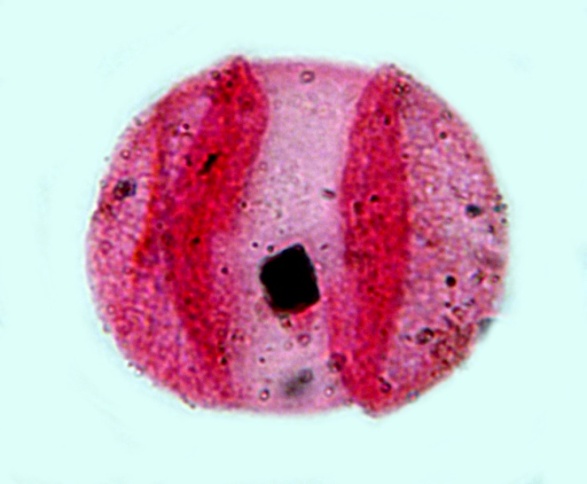
Spruce (Picea) palynomorph from the
Florissant Fossil Beds National Monument,
image by David Jarzen.


Estella Leopold assisted me in the actual research of Pleistocene pollen from Florissant. A layer associated with the burial site of a Columbian Mammoth at the Florissant Fossil Beds National Monument was found to contain Ice Age pollen and spores. This research resulted in a paper presented at the Geological Society of America in Denver in 2013. Estella was one of the original “Defenders of Florissant” and was instrumental in the Florissant Fossil Beds in becoming a national monument. Estella is the daughter of Aldo Leopold, who wrote the Sand County Almanac.


Monday, November 1, 2021

The Foster Ranch: An Early Colorado Springs Homestead

By Steven Wade Veatch   

            Marcus Aurelius Foster (1834-1923) made his way from New Ipswich, New Hampshire, to the Colorado Territory in its early days of settlement. He arrived in Colorado City, the first permanent town in the Pikes Peak region, in the spring of 1860 (Foster, 1964). Colorado Springs did not yet exist, and El Paso County would not be organized by the citizenry until 1861—one year after Foster’s arrival.

            The Pikes Peak region was a harsh and wild environment when Foster arrived. It was an expanse of shortgrass plains that ended where Pikes Peak and Cheyenne Mountain rose to the south and west. Dramatic red rock formations—the Garden of the Gods—in their skyward reach marked the transition of the plains to the mountains. At that time, the Utes traveled back and forth between their mountain hunting grounds to the west and the foothills to the east. In the winter, the Utes camped at lower elevations, sometimes near the Garden of the Gods or Manitou Springs.

Figure 1. A postcard showing the Garden of the Gods in the foreground and Pikes Peak in the background. From the S.W. Veatch collection.

            Foster’s arrival in the area marked him as one of the early El Paso County pioneers. He came along with other men who were determined to settle there. Few stores and fewer comforts were to be found. There were no railroads, and the only way to travel was on roads that were mostly tracks through grass-covered ground.

            Soon after Foster arrived in 1860, he rode up the Ute Pass trail to look around. He went as far as cone-shaped Mount Pisgah on the other side of Pikes Peak (gold would be discovered near there at Cripple Creek 30 years later). It was there that Foster met Ute Chief Ouray, who was watching a buffalo hunt from the top of Mount Pisgah. The men talked for a few minutes before Ouray raced down Pisgah’s steep slope to help his fellow hunters stop the buffalo from running away (Foster, 1964). After his encounter with Ouray, Foster rode back down Ute Pass to Colorado City.

            In 1861, Foster and J. B. Riggs left Colorado City for Buckskin Joe, a gold camp west of Fairplay. Foster and Riggs looked for gold as they shoveled gravel into a sluice box on Buckskin Creek (Foster, 1961). The record of Foster’s activities dims until four years later.

            Foster recognized the open, grass-covered landscape east of Ute Pass as an opportunity to claim and own land. He filed a homestead on 160 acres in South Cheyenne Cañon on December 1, 1865. The Civil War had ended eight months earlier, and Andrew Johnson was President. Few white people were in the area when Foster filed his homestead papers with the land office. Five years later, the census of 1870 recorded only 81 residents in Colorado City and 987 white people in all of El Paso County. General Palmer would not establish Colorado Springs until in 1871.

            Marcus Foster built a large ranching operation on his homestead that eventually included another 160 acres, for a total of 320 acres (Foster, 1967). His land and ranch house, right behind what is today the Broadmoor Hotel, was a busy place. He kept 35 “stands” of honeybees, had pigs and cattle, maintained large fields of hay and corn, kept a vegetable garden, and had a dairy operation (Foster, 1967).


Figure 2. Cheyenne Mountain looking south from the Foster ranch. Marcus A. Foster, and his son, stand by the wooden cellar ventilator. Modified from a cyanotype. Photographer and date unknown. Photo courtesy of the Cripple Creek District Museum. 

            Foster lived on his ranch with his wife Elizabeth and raised six children: Minnie, Helen, Marcus, Edith, Dora, and Lucy. Dora was born on the family homestead and became a well-known columnist for the Colorado Springs Gazette Telegraph. She was also the paper’s society and church editor. Besides her work at the Gazette, she wrote three books on Colorado history: Colorado Yesterdays, 1961; Then . . . The Best of Colorado Yesterdays, 1964; and My Childhood Days in Colorado Sunshine, 1967. She based her writing on her experiences and stories from residents of the early days of the region. Dora lived to be 94.

Figure 3. View of the Foster Ranch cattle pen. Mount Rosa and Stove Mountain are in the background. Modified from a cyanotype. Photographer and date unknown. Photo courtesy of the Cripple Creek District Museum. 
            In the spring of 1867, Chief Nevava, with his band of 500 Utes, left their winter encampment on the Arkansas River and set up a camp just below Foster’s ranch house. The Utes camped there for a brief period while they waited for the grass to green up and grow high enough for their ponies to eat before they continued on their travels.

            One day, the chief’s son, Nevava John, came to Foster’s house. Foster gave him coffee and other items. During the visit, Foster showed Nevava John a picture of William Henry Harrison’s Battle of Tippecanoe (1811) which included Indian warriors in an old Mitchell’s School Geography book in Foster’s library (Foster, 1964). This page, with the picture of the battle, interested Nevava John so much that he brought others from the camp to see it.

            Foster continued to maintain good relations with the local Indians. Old Chief Nevava, when he passed by Foster’s ranch, would occasionally stop and talk to Foster (Foster, 1964). Relations with the Indians were not always good, however. Dora wrote that one day in April 1867, a band of Ute Indians “were encamped on the banks of the Fountain, a short mile from my parents’ cabin. The Indians . . . were not known to be especially friendly toward the ranchers and were planning to drive them out of their prize hunting grounds here along the front range of the mountains “ (Foster, 1961).

            According to Dora Foster, the situation with the Indians deteriorated, and in 1868, the Indians struck at the settlers. She wrote, “People for miles around came and brought their families for protection from them, and we were forted up in the old Anway house located at 2812 W. Pikes Peak” (Foster, 1961). While the women and children stayed at the Anway house, the men, with rifles, stood guard on a nearby hill. Dora Foster continued writing about the attack:

We were living here when the three boys were killed by the Indians near where the Antlers Hotel now stands. They were herding cattle when they were attacked by the Indians from the hills. The oldest of the boys was young Everhart. He was 21 years old. The Robbins boys were younger. They were brought here and laid out in the old log building which was the first state house. It was located on the north side of Colorado Avenue, between 26th and 27th streets. I can just remember going with my sister to see the bodies, as everyone was flocking there so horrified and grieved over it. They were a terrible sight, scalped and speared, and they had placed their guns to their eyes and blew them out, and faces and necks all powder burnt. The Indians also stampeded stock (Foster, 1961).

            At Foster’s ranch, the days were long and the work hard. Cattle needed tending, the hay cut, and other crops cared for. Winters were cold and summers hot. Besides Indian troubles, grasshoppers infested the land periodically. In 1873, the area experienced a plague of grasshoppers. In response, Foster made a wooden frame with a long handle. At the opposite end of the handle he tacked a cloth sack on the wooden frame. Foster would then walk into his fields and swing the contraption back and forth at the horde of hoppers until he captured so many that the bag was full of grasshoppers. He would then take the buzzing bag near the pigpen, dump the insects into a pot of boiling water, and then feed the scalded hoppers to his pigs (Colorado Springs Free Press, 1951).

            In the summer of 1872, Marcus Foster, Daniel Kinsman, and Carter Harlan, all of whom had children of school age, organized a school board. Marcus Foster continued as a member of the school board for 32 years (Foster, 1964). Foster, a skilled carpenter, built the first schoolhouse with logs he hauled down from the east side of Cheyenne Mountain (Foster, 1961). The rustic school, built on Broadmoor Hill, had one room—about 12 by 14 feet—a door that faced east and four windows, two on each side of the school (Foster, 1961).

            In the fall, the school opened with Miss Mary Harlan as the first teacher (Foster, 1961). She was the twenty-one-year-old daughter of C.S. Harlan, the school board’s treasurer. There were eight pupils. Light came in from the windows and settled on the faces of the students as they sat at their desks. Each day, the older boys hauled a bucket of drinking water up from the creek and placed it on a wooden bench. A white metal dipper hung near the bucket.

            The school day was long, from 9 am to 4 pm with two fifteen-minute recess periods and an hour lunch. During recess and lunch, there were ball games and other activities outside (Foster, 1964). A huge pine tree grew in the schoolyard, and someone had attached a swing on a lower limb (Foster, 1964). The laughter of children filled the schoolyard during those recess periods. In the winter, there were indoor games. A round potbelly stove that burned coal heated the little log school.

            One day, a group of Indians rode into the schoolyard while the children were playing. The Indians were interested in the long hair of 10-year-old Anna Reihard and offered to trade some ponies for her. A scared Anna ran into the schoolhouse and shut the door. Fortunately, the trade was not made, and the Indians rode away (Foster, 1964).

            Sometimes during the noon recess, Frank Lewis, who lived just a short distance west of the schoolhouse, walked out on his porch, sat down on a wooden chair, and played his banjo. Hearing the music, the children walked a short distance with their lunch pails to his log cabin, where they listened to him play. When Lewis was not entertaining the students, he was building a mill on a nearby hill for Bert Myers, who had a 720-acre corn and wheat farm. After Myers finished the mill, he used the corn to make brooms that he sold in Colorado City. Meyer’s property later became part of the Broadmoor Hotel’s grounds.

            In 1881, Foster was elected to the Colorado legislature as a member of the House for two years. He served with Horace A. W. Tabor, who was a state senator and Lieutenant Governor. Frederic Pitkin was Governor.

            The Foster children entertained themselves in endless yet simple ways. In the spring, the scent of budding flowers and the smell of newly turned earth from Foster’s fields drifted in the air. This signaled it was time for the Foster children to pick wildflowers for their mother. To get to the wildflowers, they went behind the stables and crawled under a barbwire fence, and then walked down a path. To keep their dresses from tearing on the barbs, Foster wrapped the barbs with little pieces of cloth (Foster, 1961).

            There were many opportunities for fun. The Foster children put flat stones on the top of a big red anthill in the neighbor’s pasture, returning the next day to see if the ants had moved the stones. The ants always moved the stones several inches from the top of the anthill. They looked for wild bird nests and caught frogs along a water ditch. A special treat was a family trip to the Garden of the Gods for the day, and picnics among the towering red sedimentary rocks.

            On summer evenings, after supper was eaten and the dishes were cleared away, Foster and his wife sat on the front steps of the ranch house and watched their children play and gambol on the soft green grass. According to Dora Foster, the long winter evenings were the best part of each day, when the parents and children sat in the parlor room, lighted by a single kerosene lamp (Foster, 1961). It was in this room that the children read or worked on their homework. Sometimes Foster read stories to his children from the Toledo Blade that came once each week (Foster, 1961). He must have, on many occasions, pulled a book from the bookshelves to read to the children. His stiff fingers carefully turned the pages while the lamplight flickered against the uneven shadows.

            On winter evenings, after supper, Mrs. Foster brought a button box out and dumped its contents on the table. Dora wrote, it was “a box full of magic for my sisters and me when we were small” (Foster, 1967, p. 1). The Foster children, sitting around the table, played with the buttons, imagining the buttons were individual members of local families, and acting out endless stories.

Figure 4. A typical button box. Farmers and ranchers saved buttons for later use. Photo date 2021 by S. W. Veatch.
            The Foster ranch existed long ago, a place where a family experienced the pioneer days of Colorado Springs. In a newspaper article, Dora Forster wrote, “The soft mellow yellow light from the lamp, and the pleasant heat from the coal-burning stove seemed to me to be all that we wanted” (Colorado Springs Gazette Telegraph, 1972). Marcus Foster and his family lived in a timeless place of their own making. These historic photos resurrect those earlier days. Today, the frantic pace of modern life has replaced the much longer and simpler days experienced by the Fosters and other pioneer families.


Acknowledgments

            I thank Eric Swab and Dr. Bob Carnein for their valuable comments and help in improving this paper.


References and Further Reading

Colorado Springs Gazette Telegraph, 1972, Dora Foster Wrote about Pioneer Family: Colorado Springs Gazette Telegraph, March 23, 1972, p. 17BB.

Colorado Springs Free Press, 1951, Dorothy Smith Relates Stories of Early Days: Colorado Springs Free Press, October 17, 1951, p. 5.

Foster, Dora, 1961, Colorado Yesterdays: Colorado Springs, Dentan Printing Company.

Foster, Dora, 1964, Then . . . The Best of Pikes Peak Region Yesterdays: Colorado Springs, Dentan Printing Company.

Foster, Dora, 1967, My Childhood Days in Colorado Sunshine: Colorado Springs, Dentan-Berkeland Printing Company. 

Thursday, August 27, 2020

Pieplant: A Taylor Park Mining Camp

 By Steven W. Veatch

The story of the Pieplant mining camp, in Taylor Park, begins with the Ute people who hunted and roamed this land of dense forests, rushing streams, and imposing mountains. During the summer of 1860, a prospector by the name of Jim Taylor was rounding up stray horses when he rode into this remote region. The area soon became known as Jim Taylor's Park, then as Taylor Park. With the discovery of gold in 1867, placer mining began to appear (Parker, 1992). 


Figure 1. Taylor Park Reservoir is a 2000 surface acre reservoir located 29 miles northeast of Gunnison. Photo date 7/2020 by S. Veatch.

The directions to Pieplant are easy: from the north end of Taylor Park Reservoir, head north several miles on road 742. Watch for a forest road on the right-hand side. There is a sign pointing to the town/mill site. Turn right and follow this dirt road for about four miles to a clearing where several old log cabins mark the little settlement of Pieplant. 

Miners built the town beside a wide meadow near Pieplant Creek, below the summit of Jenkins Mountain (13,432 feet). Both the town and creek were named for the clumps of rhubarb (pieplant) growing wild along the banks of the creek. Pieplant Creek flows southwest from Jenkins Mountain and ranges from less than one foot to seven feet across.

Prospectors worked gold placers along Pieplant Creek as early as the 1890s. These placers did not produce much gold. Miners later established the mining camp of  Pieplant around the turn of the 20th century (Vandenbusche, 1980). Over forty men worked at the Pieplant mine, which was about a mile away from the settlement (Vandenbusche, 1980). 

By 1903, Pieplant had 100 residents, a post office, and a stamp mill (Vandenbusche, 1980). Four-horse teams hauled ore in wagons down a steep road on Jenkins Mountain to the mill (Wolle, 1962). The mill, built by Wood's Mining and Milling Company of Kansas, handled 200 tons of ore each day from the Pieplant and other area mines (Pieplant, n.d., Eberhart,1969). The mill was 280 feet long and 110 feet wide, and employed 50 men (Vandenbusche, 1980). Day (1906) mentions that gold bullion was shipped from Pieplant’s “cyanide plant” in 1905.
 
A newspaper article from the Turret Gold Belt (1905) describes some of the excitement of the mining camp:
"Just a year ago (1904) the Burton brothers of Virginia sold to John Lynch of this city [Turret] and J. W. Harrison, a capitalist of St. Louis, a group of four claims known as the Clinton group and which adjoins the property of the Woods Gold Mining company at Pieplant. The consideration of the sale was $16,000, and the claims are practically undeveloped. That the judgement of the purchasers was good has now been proven, as their tunnel a few days ago cut a lead [vein] which is fourteen feet between walls and from which highly satisfactory assays have been had. The average of the entire lead is good, and a portion of the vein carries gold and copper to the value of $120 per ton, while picked samples run way up into the hundreds. As soon as the assay certificates were received Mr. Lynch started at once for the East, where a plan of development will be decided upon. . . .While this district is rich in minerals lack of transportation has held it back for a number of years."

According to the Twin Lakes Miner (1906), J.W. and M.H. Woods had driven a 1,700-foot tunnel that ran along a gold vein for 1,300 feet. The best gold values, according to the article, were ahead of the tunnel where the “ore shoot widened to 4 to 7 feet in width.”

The town began to decline after 1908 as the veins thinned out and transportation costs exceeded profits from mining (Pieplant Mill, nd). Soon after 1910, Pieplant was abandoned and cows grazed there. A few of the log cabins (figures 2 and 3), the collapsed ruins of the Pieplant mine, and part of the mill building (figure 4) remain today—reminders of the early mining operations that occurred there.


Figure 2. In 2006, the Forest Service and Passport in Time put a new roof on this Pieplant cabin in their preservation efforts. Photo date 7/2020 by S. Veatch.


Figure 3. A Pieplant miner’s cabin along a meadow. The long poles supported a porch roof. Photo date 7/2020 by S. Veatch.


Figure 4. View of Pieplant mill ruins. The Pieplant mine is located about one mile north of the mill on Jenkins Mountain. Photo date 7/2020 by S. Veatch.

Pieplant is located on the western flank of the Sawatch Mountains, below Jenkins Mountain. Grizzly Peak (13,281 feet) is to the east. Locally, Paleozoic sediments mask folded and faulted Precambrian rocks. The area experienced uplift, folding, and thrust faulting during the Laramide Orogeny. Sometime in the Miocene Epoch crustal movement began again, resulting in a series of faults. 

During the Pleistocene Epoch, ice was the last major geologic agent to shape the area. Alpine glaciers moved down the mountains—carving preexisting fluvial erosional valleys into distinctive U-shapes or filling them with unsorted glacial till. 

Gravity and alluvial processes concentrated native gold in local placer deposits (Parker, 1974). The gold, hosted in Quaternary alluvium, appears as wires, small flakes, and as sporadic small nuggets (Parker, 1992). Early miners in the area worked Pieplant Creek gold placers below 9,850 feet in elevation (Parker, 1992). Despite careful prospecting, the source of the placer gold has never been discovered.

However, other minerals besides gold and black sand (magnetite) are found in the area. Pan concentrates yield columbite-tantalite, the ore of tantalum (Parker, 1992). This black mineral is not magnetic and is the principal ore of tantalum (Ta), a rare metallic element discovered in 1802 by a Swedish chemist, A.G. Ekeberg. The hard, malleable blue-gray metal has several industrial uses. 

Monazite, a slightly radioactive mineral, shows up as blackish to greenish grains in gold pans (Parker, 1992). Monazite is the primary ore of the rare earth metals cerium and lanthanum. These metals have multiple industrial uses. Because of monazite’s high density (specific gravity is 4.6 to 5.7), monazite grains, along with the gold, collected into placer deposits. Other heavy minerals that appear in pan concentrates are zircon and garnets (Parker, 1992). The sources of the heavy minerals are local granites and pegmatites (Parker, 1992).

Today Pieplant is a quiet place where a few cabins and structures remain near the edge of an open meadow. Pieplant Creek, which flows nearby, is still a good place to search for flakes of gold, especially in ravines and outwash terraces, on slopes, and in gulches.

References and Further Reading:

Day, D. T., 1906, Mineral Resources of the United States Calendar Year 1905: Washington, Department of the Interior, United States Geological Survey.

Eberhart, P., 1969, Guide to the Colorado Ghost Towns and Mining Camps: Chicago, Sage Books.

Parker, B. H., Jr. 1974, Gold placers of Colorado: Colorado School of Mines Quarterly, Vol. 69, No. 3.

Parker, B.H. Jr., 1992, Gold Panning and Placering in Colorado: Denver, CO Information Series 33. Colorado Geological Survey.

Pieplant Mill. Retrieved from https://www.fs.usda.gov/detail/gmug/landmanagement/resourcemanagement/?cid=stelprdb5432060/ on July 12, 2020.

Turrett Gold Belt, 1905, Taylor Park Producers: Turrett Gold Belt, November 1, 1905, p.1, c. 3.

Twin Lakes Miner, 1906, Good News for Pieplant Gulch: Twin Lakes Miner, Aug. 11, 1906, p. 1, c. 3.

Vandenbusche, D. 1980, The Gunnison Country: Gunnison, B&B Printers.

Wolle, M.S., 1962, Stampede to Timberline: The Ghost Towns and Mining Camps of Colorado: Denver, Sage Books.


Sunday, December 16, 2018

Uptop: A Winter Poem

By Steven Wade Veatch

A winter wind blows swirling flakes of snow
that blankets the quiet town of Uptop. 
Light from a coal-oil lamp casts
a golden glow down a silent, powdery street.

People of Uptop long for spring days;
the shifting realm of white to robust green
when flowers spread a chorus of colors
in an alpine crescendo.

For decades they came over highland passes;
searching for gold in streams or silver in veins.
Others started ranches where the grass was good. 
And each one tamed the mountain wilderness.

The depot built by section hands still stands 
that once met fortune seekers coming over the Pass.
Today the rails are gone and travelers are rare.
Only a few stay in the small town of Uptop.

On Sunday at the Chapel by the Wayside
a church bell rings—renewing spirits
of humbled hearts who stay another year,
in the forgotten town of Uptop, Colorado.


_______________________________________
Directions to the ghost town of Uptop, Colorado:
Two turnoffs to Uptop ghost town are located off Hwy 160:
• 20 minutes east of Ft. Garland, CO: turn at mile marker 276.
• 15 minutes west of La Veta or 20 minutes west of Walsenburg: turn at mile marker 281.

Thursday, December 10, 2015

The Cripple Creek and Victor Gold Mining District: A Sense of Place

By Steven Wade Veatch

No one really stays the same in life; our experiences shape us. Places change us. For me, a place, the Cripple Creek Mining District, influenced my life and made significant changes in me. I remember childhood days going to Cripple Creek, my mind spiked with curiosity and a sense of fascination, and with wide eyes marveling at the tall head frames marking where mining took place in the late 19th century. Over the many decades that followed I developed a strong bond to Cripple Creek where a true sense of place developed through a growing knowledge of the history, its legends, it geology.  
Memories of rock hunting, attending Victorian melodrama, and exploring the landscape make this place special. I learned to play the bluegrass song Cripple Creek from memory on my guitar and pursued a master’s degree in Earth Science. These things anchored me to the gold camp while shaping my mind and my life.


A mining scene in the Cripple Creek  Mining District.
Original watercolor art by Steven Wade Veatch.

The decades blend and blur, but the story of dreams, desires, and building a mining district in the sleepy hills next to the quiet granite of Pikes Peak remains compelling. The Cripple Creek Mining District lies on the southwestern side of 14,115-foot-high Pikes Peak in southern Colorado. Bob Womack, a ranch hand and itinerant prospector, discovered gold in late October,1890 that all of the other prospectors missed. His discovery sparked a rush of prospectors into to the area under a quiet sky. Soon low-grade ore deposits in unyielding igneous rocks led to the unearthing of rich veins of gold. Miners spread across the district and dug fortunes out the six-square-mile bowl of gold. The high concentrations of gold telluride minerals made this place like no other in North America. The area soon became known as the World’s Greatest Gold Camp.


Cripple Creek, looking northeast. The partly wooded knob on the left is Rhyolite Mountain.
Just beyond the town are Mineral and Carbonate hills and in the background is Pikes Peak. Teller County, Colorado. September 181903, plate 4-B in U.S. Geological Survey. Professional paper 54. 1906d 
The nationwide Silver Panic of 1893 and with it tough economic times made people consider how their whole lives could turn out to be nothing with an endless supply of extraordinary ordinariness. Cripple Creek made a difference: a golden beacon of promise shone across the nation from Cripple Creek as newspapers carried exciting stories of gold. Cripple Creek brought the nation new hope. This state of affairs brought thousands of out-of-work men, fortune seekers, and fortune makers who poured into the gold camp searching for work, wealth, and wonder. Together the miners, mine owners, merchants and all the people of the mining district consumed life at a fever pitch. The gold rush to Cripple Creek forever changed the landscape where mountain men once explored and the Ute Indians roamed.
Cripple Creek sprawled around the base of Mount Pisgah where grassy hills, dotted with wildflowers, became an instant city of tents and log cabins. The wind buzzed as it passed the corners of the cabins while the sun rose over the goldfields. Soon lumbermen built sawmills that produced a supply of sawn boards for the well-to-do townspeople who built large, two- or three-story frame houses. In this brawling, raucous, free-for-all mining camp food was expensive, water scarce, and whiskey plentiful.


Cripple Creek, looking west from Gold Hill. The Midget and Conundrum mines are in the foreground and Mount Pisgah is in the background. Teller County, Colorado. October 3, 1903,
plate 4-A in U.S. Geological Colorado Professional Paper 54. 1906.
By 1900, 500 mines had been located and more than a dozen towns established—including Cripple Creek, Victor, Altman, Independence, Elkton, Anaconda, Arequa, Lawrence, Cameron, Mound City, Goldfield, and Gillett.  Many of the gold mines were located either in or near the City of Victor. During that peak year 8,000 miners produced more than 878,000 ounces of gold. A number of the mines were well capitalized business operations with large payrolls. The Portland Mine boasted 700 workers who worked for $3 a day in wages. The district continued its growth despite several horrific fires and major labor conflicts in 1894. Then in 1903 through 1904 labor strife surfaced againwhen anger gloomed like a darkness, scores of men were killed, and 225 miners sent packing out of the district.


Bull cliff and town of Independence, Vindicator mine to right. Teller County, Colorado.
October 7, 1903, plate 25-B in U.S. Geological Survey. Professional paper 54. 1906
The district’s population in 1900 climbed to 50,000 people served by hotels, restaurants, lawyers, and brokerage houses. A number of assay offices, overflowing with lab equipment, operated in the district. Bankers had long lunches with mine owners in restaurants graced with china plates, white napkins, and sparkling glasses. Children attended crowded schools, and newspapers printed the headlines of the day. Busy mining men took time out for a drink of whiskey in saloons; business was brisk at dance halls, pool halls, and theaters. A notorious red-light district on Meyers Avenue sprang to life each evening when the sun slid behind Mineral Hill.
The people who traveled to the Cripple Creek Mining District brought their institutions and customs, including fraternal organizations, band concerts, opera, theater, and religion. Sunday church services were an important part of life in the gold camp. Miners celebrated the Fourth of July with enthusiasm that included parades and games. Sporting events were a big draw in Cripple Creek with the townspeople attending boxing matches, baseball games, and firemen’s races.
As the gold camp grew, railroads linked the area to the outside and kept the district provided with food, supplies, and equipment. Teamsters drove horse- and mule-drawn wagons with creaking wagon wheels along a winding dirt road to bring in supplies while muleskinners hauled ore to local smelters.
Streets bubbled with activity from curb to curb while the pace of business filled the air with whispering motes of gold dust. Each morning the sun greeted Bennett Avenue—illuminating outdoor advertising of patent medicines painted onto the bricks of commercial buildings—and brought the promise of energy, commerce, and hope for the day.
The gold camp had its share of production problems.  The gold in Cripple Creek was unlike the gold ore in other western mining camps. Cripple Creek’s gold was locked in gold-telluride minerals.  This mineralogy required different methods of ore reduction. The chlorination process, instead of the standard stamp milling and amalgamation process, separated gold from gold-bearing minerals in its host rock.  Later in the district cyanide leaching—a more efficient process—replaced chlorination.
Water became a serious problem as underground workings deepened and hit the water table. To mitigate this issue, drainage tunnels were driven to drain the mines. The Carlton Tunnel, completed in 1941, was the longest of these drainage tunnels and drained the deepest levels of the Vindicator Mine. These tunnels of hope filled with murmuring water emptied into Fourmile Creek.
Mining precious metals from the hard rock of Cripple Creek’s gold mines contributed to the recovery of the nation after the Silver Panic and contributed to the economic development of Colorado. The Pikes Peak region’s economy boomed from the goldfields. The district created 30 millionaires from its large and famous mines. Winfield Scott Stratton, a Colorado Springs carpenter, prospected in the hills for 15 years and struck it rich on the 4th of July 1901 when he claimed the Independence Mine. He later sold it for $11 million. Spencer Penrose and Charles Tutt sold the C. O. D. Mine to a French syndicate. Penrose used his share of the profits to build the celebrated Broadmoor Hotel in Colorado Springs and to invest in Utah copper mining.
After WWII, most of the mines were not profitable and shut down. In 1976, Texasgulf and Golden Cycle formed a joint venture, the Cripple Creek & Victor Mining Company to restart mining in the district.  This year marked the revival of gold mining in the district. The Cresson Mine was permitted in 1994 as an open pit mine and gold production increased each year.  Through mergers and acquisitions, ownership of the Cripple Creek & Victor Gold Mining Company changed. Today, the Newmont Mining Company owns the mining operations. In 2014 the company poured 266,000 ounces of gold; and in 2015 poured its five-millionth ounce.
Limited-stakes gambling, approved by the voters of Colorado in 1991, added to the resurgence of Cripple Creek. The historic brick buildings on Bennett Avenue re-energized as casinos. Today gold is mined around the clock in the goldfields again, and is changing the landscape once again. The renewed mining combined with limited-stakes gambling constitute a rebirth of the district and revitalized Cripple Creek and Victor.
When I go to the Cripple Creek and Victor Mining District, I feel the presence of grandparents and ancestors working in the mines and making a living there. I feel of the sun and shifting mountain breeze. I see the headframes and prospects that dot the land, and smell the burning coal in the steam engine that leaves from the depot next to the Cripple Creek District Museum. I sense the identity and character of the district that is valued deeply by residents.  I am connected to this place. I spend time there, and share my feelings and the stories of the unique human experiences that makes this the World’s Greatest Gold Camp.

The World’s Greatest Gold Camp has refused to fade into the mists of history, but remains the source of legend.


Saturday, June 13, 2015

The Crystal Peak Gem Company

Steven Wade Veatch
and
Andy Weinzapfel

Just north of the small town of Florissant, Colorado is a prominent topographic feature shaped like an Egyptian pyramid.  Early settlers knew this as Cheop’s Pyramid or Topaz Butte. Today it appears on maps as Crystal Peak, an important geological and historical point of interest.

The geology of the Pikes Peak region is dominated by the 1.07-1.09 billion-year-old Pikes Peak batholith, a large body of once-molten rock that was likely derived from the earth’s deep mantle and injected upward to a depth of 3 miles or less below the surface.  Crystal Peak is part of this batholith (Bryant et al, 1976). The Pikes Peak Granite, extending over an area of 1200 square miles, is exposed at the surface today only because the rocks that once covered it have gradually eroded away.


A common but erroneous belief is that Crystal Peak is an old volcano.  Its pyramidal shape is actually due to differential erosion, a process whereby fine-gained granite (aplite) on the peak weathers away more slowly than the surrounding coarser grained variant.

Figure 1. View of Crystal Peak from the
 Florissant Fossil Beds National Monument. Photo © by S. W. Veatch


A number of remarkable minerals occur at and near this site in pegmatite (coarse-grained rocks of granitic composition) dikes that contain open pockets, or what geologist's call miarolitic cavities. These cavities form near the earth's crust during the cooling of the parent magma, and allow room for the growth of well-formed crystals inside the cavities (Dietrich and Skinner 1979).

Exceptional mineral specimens from the Crystal Peak area can be found in many of the best national and international museums. Most notable are greenish or greenish-blue euhedral (smooth-faced) crystals of amazonite, a relatively rare and beautiful variant of a common mineral, microcline feldspar. Feldspar, along with quartz, is a major constituent of granite, the most prevalent igneous rock found in continental mountain ranges. Smoky quartz is the black or brown variety of quartz. The color of smoky quartz is related to the small but ubiquitous amount of radioactivity that occurs in the surrounding granitic rock. Smoky quartz crystals from the area are a lustrous, opaque black.  Fluorite is a late-crystallizing mineral in pegmatite pockets. Fluorite cubes are the most common crystal habit, ranging from colorless to various shades of pale blue. Color zoning is present, and dark purple is noted along the edges of some fluorite cubes.

The Ute Indians were the first collectors of crystals from this area, used for spiritual purposes. Collectors have been working the area since the 1870s for amazonite, smoky quartz, fluorite, and other minerals (Wobus 1976, Eckel 1997). A. C. Peale, a member of the 1874 Hayden Survey, wrote about amazonite and smoky quartz crystals in the Pikes Peak region while in the area (Peale, 1873). In the 1870s, Dr. A. E. Foote of Philadelphia systematically explored the area, employing 19 men, and shipped many specimens back east.  Arthur Lakes, who accompanied Samuel Scudder of Harvard University on an early paleontological investigation of the area, sketched the first regional geologic map of the Florissant valley while sitting on Crystal Peak.

Abram Joshua Randall wrote an article in the Georgetown Centennial, February, 1876 about the gem fields of Crystal Peak. It is also one of the earliest known accounts of the Crystal Peak pegmatites (brackets in the transcribed article are used to identify clarifying additions by the authors).  The title of the article was: A Fruitful Field for the Specimen Hunter. Randall writes:


“Florissant, in El Paso County, 35 miles west of Colorado Springs, is celebrated for the great variety and abundance of geological and mineralogical specimens found in its vicinity; and it has become a noted resort for tourists passing through that portion of the Territory. . . Eight miles north-east of Florissant are the ragged peaks of the Crystal Mountains . . .  A range of rocky peaks, so named from the amount of crystals there found. In the last two years [discovery of locality circa 1874-5] many thousands of pounds have been taken out, the greater part of which have been sold in Manitou, Colorado Springs and Denver, but many have also been shipped east. The crystals formed there, are Smoky Quartz, Orthoclase, Adularia, Amazonstone, Green, Purple and White Fluor Spar, Specular Iron and also a few specimens of Amethystine Quartz, but these last are rare.

These pockets contain from a single handful to several hundred pounds of crystals. From one pocket opened last September [1875], by Mr. Anthony, about 4,000 pounds were taken. Some of the Quartz crystals are of immense size; one taken out last spring by Mr. Disbrough, was about 4-1/2 feet in length, and 10 inches in diameter at the base, and is now in [Reverend Lewis] Hamilton’s Museum, in Denver [formerly of Central City in 1869]. During the summer [of 1875], several were found from 20 to 30 inches long. 


Last Summer and Fall [of 1875] there were from 25 to 30 miners here constantly, besides some thousands of tourists and excursionists. Deer were plentiful in the neighboring hills, the scenery grand and picturesque, thus inviting the hunter as well as the curiosity seeker to spend a few days among the sylvan shades of these everlasting hills.”


In 1908, A. B. Whitmore established the Crystal Peak Gem Company north of Crystal Peak, a successful mining operation that developed mineral property.  The Crystal Peak Gem Company mined precious and semi-precious gemstones in the pegmatite cavities found on Crystal Peak. The company was incorporated in Wyoming. A company stock certificate (number 26, issued April 22, 1912) is signed by president Anna M. Saunders and Albert B. Whitmore as the secretary. Anna Saunders is listed in the 1906 Colorado Business Directory as the proprietor of Burlington House, 101 W. Masonic, Cripple Creek, Colorado. Burlington house was probably a boarding house serving the gold mining district.
Figure 2. Early photo of the Crystal Peak Gem Company’s operations on Crystal Peak. Notes on the photo: “Camp of Crystal Peak Gem Co. G. W. Weed of company on right. J.D. Endicott on left. Specimens of quartz, amazonite, etc. in shelves. Coplen Dome, a granite knob, beyond. Photo date Aug. 1913. Photo credit: U. S. Geological Survey.  

The Mining Investor, in 1911, announced the Crystal Peak Gem Company was owned large acreage in Teller County, north of Florissant and “has sent its president and general manager A.B. Whitmore and three miners to perform annual assessment work on its claims on Crystal Peak (The Mining Investor).”  The announcement continued by listing the gemstones found and that they were in demand.

According to the 1917 Biennial Report issued by the Colorado Bureau of Mines, small quantities of stones were produced by the Crystal Peak Gem Company, including amazonite, smoky quartz, clear quartz, topaz and phenakite. Specimens from Crystal Peak and ore samples from the mines in Cripple Creek were sold in the curio stores of Denver and Cripple Creek. The Crystal Peak Gem Company conducted mine tours. The gem company had a store operating at 508 Bennett Avenue, the main street of Cripple Creek.

Figure 3. Postcard depicting view of the gem mines as a tourist attraction.  
From the collection of S. W. Veatch Image © S. W. Veatch. 
Successful collecting in the area continues today, as witnessed best by the discovery of several gigantic smoky quartz crystals on the Godsend Claim in 2002 by Rich Fretterd. These unique specimens currently reside in the Pikes Peak Historical Society museum in Florissant. More recently, an exceptional amazonite-smoky quartz cavity, known as the Icon Pocket, yielded possibly the finest known plate, or cluster, of these minerals in the world.   This treasure was found on the Smoky Hawk Claim by the Dorris family.  More crystal specimens await  discovery in the Crystal Peak area.

References Cited:


Bryant, B., F. Barker, R. A. Wobus and R.M. Hutchinson. 1976.  Road Log, Pikes Peak Batholith Field Trip.  In Studies in Colorado Field Geology, ed. by R.C. Epis and
R.J. Weimer, 17-31.  Colorado School of Mines professional contributions 8.

Dietrich, R. V. and Skinner, B.J. 1979, Rocks and Rock Minerals. New York:   John Wiley & Sons,

Eckel, E. B. 1997.  Minerals of Colorado:  A 100-year Record, Updated and Revised.
Golden:  Fulcrum Publishing.

MineralDat Foroum. (2006). Retrieved from http://www.mindat.org/forum.php?read,6,51496,51496,quote=1

Peale, A. C. 1874.  Seventh Annual Report of the Hayden Survey, 1873.

The Centennial [newspaper] (1876). February, 1876 Vol 1, no. 2, page 1, col 3  and page 2, col 1 and 2. Published by Jesse Summers Randall, Printers’ Alley, west of the Miners’ Assay Office, Georgetown, Colorado.

The Mining Investor. (1914). Retrieved from https://books.google.com/books?id=eMY_AQAAMAAJ&dq=%22crystal+peak+gem+company%22&source=gbs_navlinks_s

Wobus, R. A. 1976.  New data on potassic and sodic plutons of the Pikes Peak Batholith
central Colorado.  In Studies in Colorado Field Geology, ed. by R. C. Epis and R.

J. Weimer, 57-67. Colorado School of Mines professional contributions 8.